Psychedelic Blue Lotus Of Egypt; Ancient Magic Meets Modern Science
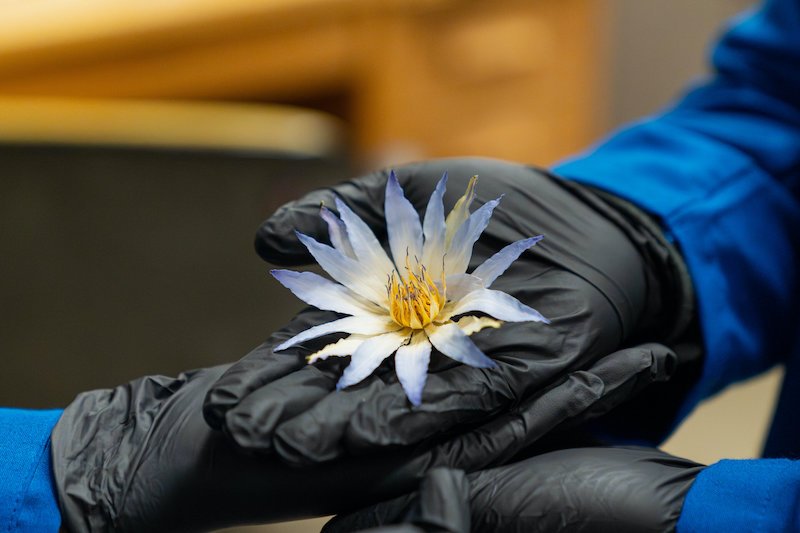 Liam McEvoy, a fourth-year UC Berkeley student majoring in anthropology and minoring in Egyptology, has spent much of his time on campus studying the cultural significance of the Egyptian blue lotus and the chemical properties that differentiate it from products sold online. Credit: Diego Moran/UC Berkeley
March 18, 2025
Few plants are more celebrated in Egyptian mythology than the blue lotus, a stunning water lily that stars in some of archaeology's most significant discoveries. Researchers found its petals covering the body of King Tut when they opened his tomb in 1922, and its flowers often adorn ancient papyri scrolls.
Scholars have long hypothesized that the lilies, when soaked in wine, release psychedelic properties used in hallucination-and-sex-fueled rituals dating back some 3,000 years.
Perhaps, then, it's not surprising that a plant resembling the blue lotus is now marketed online as a soothing flower, one that can be smoked in a vape or infused in tea.
There's just one problem, according to Liam McEvoy: The blue lotus used in ancient Egypt and the water lily advertised online are completely different plants.
(more)
- CategoriesEdited | All Content | Agriculture | Culture | Education | Business | Environment | Health | Science | Africa | North America | Middle East | News -- WNT Selected | Text | Images | Front Page Stories | Front Page News & Analysis
- Date rangeTuesday, March 18, 2025
- Last modifiedWednesday, March 19, 2025
